The Benefits of Regular Audiology Check-Ups
Routine audiology check-ups are often overlooked, but they play an
By: admin | May 8, 2025
Hearing aids in 2025 are far beyond what most people remember from just a few years ago. Our audiologists at Huron Valley Hearing have watched first-hand as the field has shifted rapidly, driven by smarter chips, AI, new wireless standards, better battery options, and even built-in health tools. For patients and families in Highland, MI and throughout the region, understanding what’s available now can be the key to better hearing, more comfort, and greater confidence.
Artificial intelligence is now the backbone of premium hearing aids. The latest devices use deep-learning algorithms, which means they are able to make sense of the complex soundscapes people encounter every day. With AI, your hearing aids don’t just passively amplify noise; they actively process which sounds are important and adjust themselves on the fly.
For example, if you step into a busy restaurant, an AI-powered hearing aid will dynamically lower background clatter while making sure you can clearly understand the person across the table. The technology learns your habits and preferences over time, meaning the more you wear your hearing aids, the better the sound processing becomes.
Many new models can even remember the types of environments you spend time in – whether you’re at home, outside, or in a bustling store – and personalize their settings automatically for each scenario. This approach doesn’t just provide louder sound; it delivers clarity, especially when it comes to speech understanding in complex listening environments.
One of the most impressive leaps forward is neural sound technology, often referred to as Neuro Sound Technology 2.0 in the latest releases. These hearing aids feature special neural processing units that actually mimic how a human brain singles out meaningful sounds from noise.
Clinical results show up to a 30% improvement in speech recognition with these processors, especially in group conversations or public spaces with lots of background noise. Our audiologists have seen real-world benefits for patients who previously struggled in social settings, making birthdays, weddings, and even coffee shop chats far less frustrating.
Connectivity has also taken a big step forward in 2025. While Bluetooth has been part of hearing aids for several years, the introduction of Bluetooth Low Energy (LE) streaming is a game changer. This means you can stream calls, music, or podcasts from your phone directly to your hearing aids using less power.
Pairing is also faster and less cumbersome. There are fewer dropped signals, and switching between devices (such as from your phone to your TV) is more intuitive than ever before.
A major breakthrough in accessibility is Auracast audio broadcasting. This new wireless standard lets hearing aid users tap into live audio streams in public places—think theaters, airports, gyms, churches, or lecture halls. Instead of relying on outdated loop systems or asking for special receivers, you can receive high-quality, direct sound right in your hearing aids when you walk into a supported venue.
While not every public space offers Auracast yet, the rollout is happening fast, and many of the hearing aids we fit today are already Auracast-ready. When this becomes mainstream, it will make events and public announcements much more accessible for people with hearing loss.
The boundary between hearing aids and general health technology is quickly disappearing. New models now incorporate a range of wellness sensors to support a more independent and healthy lifestyle. These features are especially appealing for our senior patients, people with health concerns, and anyone looking for peace of mind.
Our audiologists can help you understand which features make sense for your needs and how to use them safely. With these developments, hearing aids become more than just hearing devices—they’re part of an overall wellness strategy.
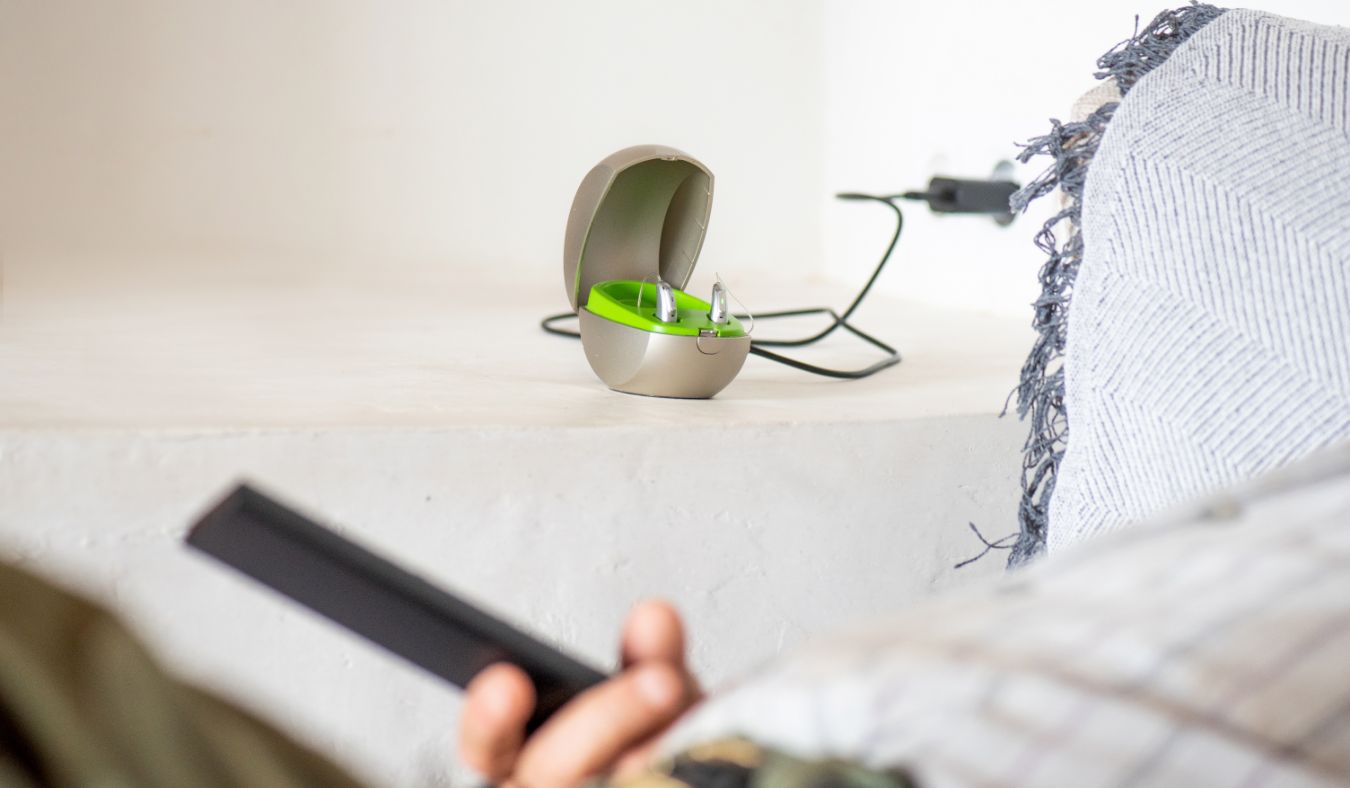
Disposable batteries are rapidly being replaced by efficient, long-lasting rechargeable options. Most new models come with a compact charging case, providing a full day’s use in just a few hours. This move away from single-use batteries not only simplifies daily life (no more fumbling with tiny battery doors), but it’s also better for the environment.
Sustainability extends to the materials used in the shells and packaging. Many brands now use recycled plastics or biocompatible materials designed to last longer and break down safely when replaced.
Forget the beige, whistling hearing aids of the past. Today’s devices are sleeker, lighter, and available in a range of styles and colors. Whether you prefer a nearly invisible in-the-canal model or a more traditional behind-the-ear fit, there’s an option that reflects your personality without sacrificing performance.
Some people choose bold colors to show off their tech, while others want their hearing aids to be as discreet as possible. Our audiologists always prioritize your comfort and preferences during hearing aid fitting appointments, ensuring both a secure fit and the aesthetics you want.
Companion apps put the power to personalize your hearing experience right in your pocket. Through your smartphone, you can easily make real-time adjustments to volume, noise reduction, or directional focus—even in the middle of a conversation.
Our audiologists help you set up and learn your app, providing ongoing support as new app features roll out.
With so many advancements, it’s easy to lose track of just how much has changed in recent years. For a clear sense of what’s now possible, here is a summary of 2025’s most impactful features:
One of the quieter breakthroughs in hearing health is the shift in how hearing aids are viewed by society at large. Popular consumer tech brands have entered the market, and hearing aids are merging with “hearables” and wellness devices. This change, fueled by better design and the normalization of in-ear tech, means more people are seeking help earlier and feeling confident about their decision.
Hearing aids are now seen as smart investments in health, communication, and safety. Our audiologists regularly speak with patients who are surprised by how discreet and high-tech their new devices look and feel compared to what they remember from even five years ago.
With all these new features, hearing aids are more powerful—but also more complex. Personalized fitting, expert programming, and ongoing care remain critically important. The right device for you depends on your specific hearing profile, lifestyle, dexterity, and even your personal tech comfort.
Our audiologists use advanced diagnostic tools to assess your hearing, recommend the most suitable technology, and fine-tune settings for your needs. We also provide support and education, from troubleshooting to updates and accessory selection.
The rapid evolution of hearing aid technology in 2025 means that more people can enjoy clear, comfortable hearing in every part of daily life. At Huron Valley Hearing in Highland, MI, our team is passionate about helping you get the most from these life-changing advances.
If you’re ready to try the newest generation of hearing aids, or if you want to know how recent improvements can help with your specific hearing situation, call us at (810) 206-0319. Our audiologists are here to answer your questions, guide you through the latest options, and ensure you have the best possible experience every day.
Tags: benefits of hearing aids, hearing aid features, hearing aid technology
Routine audiology check-ups are often overlooked, but they play an
By: admin | September 25, 2025
Hearing aids in 2025 are far beyond what most people remember from just a
By: admin | May 8, 2025