Signs of Hearing Loss in Teenagers and Young Adults
Growing up around Highland means growing up with plenty of sound. Summers


By: Dr. Richard Wandzel | December 21, 2025
Getting a hearing test is one thing, but understanding what the results actually mean is what helps you make informed decisions about your hearing health. When you leave your appointment with a chart full of lines, numbers and abbreviations, it’s easy to feel overwhelmed or unsure about what you’re looking at.
But those results aren’t just technical data for your audiologist to interpret. They’re a clear picture of how your ears are functioning right now and where you might need support.
Your hearing test results tell you more than whether your hearing is “good” or “bad.” They show you which sounds and frequencies you’re picking up clearly and which ones you’re missing, which helps explain why certain situations feel harder than others.
Reviewing your results with your provider isn’t about memorizing medical terms or becoming an expert overnight. It’s about knowing enough to feel confident in the decisions you make about your hearing care.
Each section of your hearing test result provides information about how well you hear different sounds. The main parts include frequency (pitch), volume (loudness) and word recognition scores. These results help show which sounds are more difficult for you to hear in everyday life.
Sometimes, the technical details of a hearing test can feel overwhelming. If you find yourself confused, ask the specialist to explain how each part of the test relates to real-world listening.
This can help you connect your results with situations you encounter every day, like conversations or listening to music.
Before the hearing test begins, you’ll have a conversation with the audiologist about your hearing history and any concerns you may have.
They’ll ask questions about your general health, exposure to noise, family history of hearing loss and situations where you notice difficulty hearing. This helps the audiologist understand your unique needs and tailor the evaluation to your experiences.
Next, the audiologist examines your ears to ensure there are no visible issues that could affect your hearing. This includes checking for earwax buildup, signs of infection or any structural concerns with the outer or middle ear.
Once the preliminary steps are complete, the testing process begins. You’ll be guided through a series of exercises designed to assess how well you hear different pitches and volumes.
The audiologist will explain each step so you know what to expect and can respond accurately. Throughout the session, they may ask you to indicate when you hear tones, repeat words or identify the direction of sounds.
The goal of the initial evaluation is to get a clear picture of your hearing abilities. This information helps the audiologist determine whether further testing is needed and what options might be most effective for improving your hearing.
Hearing involves more than just detecting sound. Different parts of your auditory system work together to capture, transmit and process what you hear. A comprehensive hearing evaluation examines these different functions to pinpoint where any difficulties may be occurring. Understanding the types of tests can help you know what to expect and why each one is important.
The audiologist may use several different tests to get a complete picture of your hearing, including:
During a hearing test, sound follows a specific path through your ear. This helps your professional identify where any hearing loss may be happening.
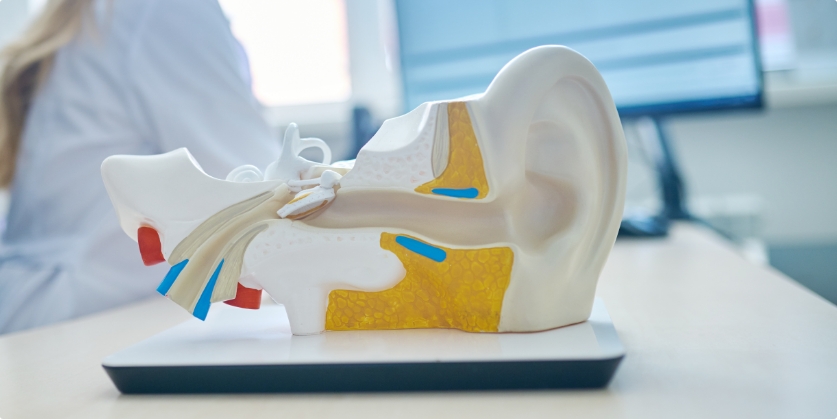
Sound waves enter the ear canal and reach the eardrum, causing it to vibrate. These vibrations travel through tiny bones in the middle ear and then reach the inner ear, where special cells turn them into signals for your brain.
Some tests use headphones to send sounds through the air, while others use a small device behind your ear to check how well sound moves through the bones. This helps determine if hearing loss is related to the outer or middle ear, or if it starts deeper inside the inner ear.
Many people are unsure about what frequency and pitch mean when looking at their hearing test results. Frequency, measured in Hertz (Hz), shows how high or low a sound is. Pitch is how we hear those frequencies. On your hearing test chart, low frequencies are on the left and high frequencies are on the right.
If your results show more difficulty with high-frequency sounds, you may notice trouble hearing voices in a crowd or certain consonants in words.
Paying attention to these patterns can help you understand why some sounds are clearer than others during daily activities. If you are unsure, ask your audiologist to explain which pitches are hardest for you to hear and how this might affect speech or music.
Decibel (dB) levels on your hearing test show how loud a sound needs to be for you to hear it. Lower decibel numbers mean you can hear softer sounds more easily, while higher numbers mean you need sounds to be louder before you can hear them.
Most people with normal hearing can pick up very quiet sounds at around 0-25 dBs. If your results are above this range, it may mean there is some degree of hearing loss that could affect how well you hear in daily life.
An audiogram chart is a graph that displays how well you hear different pitches and volumes. The horizontal line at the bottom represents pitch, moving from low sounds on the left to high sounds on the right. The vertical line on the side shows loudness, with softer sounds at the top and louder sounds at the bottom.
Each ear is marked with symbols – often circles for one ear and Xs for the other – at each pitch tested. If these marks are higher up, you can hear softer sounds at that pitch. If they are lower down, louder sounds are needed for you to hear those pitches. Looking at where these marks fall on the chart shows which types of sounds may be harder to notice in daily life.
Learning what each symbol and marking means on your hearing test results can help you feel more confident when reviewing your chart.
Common symbols include circles for the right ear and Xs for the left ear, with other shapes or lines sometimes used for different types of tests or results.
These symbols make it easier to compare how each ear hears different sounds at a glance. If you find the markings confusing, ask the specialist for guidance so you can better understand your results and discuss next steps.
Normal hearing usually means you can hear sounds between 0-25 dBs across a range of pitches. On an audiogram, this is shown by marks that stay within the top part of the chart, close to the 0–25 dBs line for each frequency tested.
If you are unsure whether your results fall within this normal range, ask your professional to point out where your results are on the chart and explain what those levels mean for daily listening. This can help make your results feel more meaningful and less overwhelming.
Hearing loss is measured in levels, ranging from mild to profound. These levels are based on how loud a sound needs to be before you can hear it during a hearing test. Understanding the different levels can help explain why certain situations feel more challenging.
Word recognition scores show how well you can hear and repeat words when they are spoken at a comfortable loudness. These scores help your audiologist see how clearly you understand speech, not just if you can detect sounds.
A high word recognition score means you can understand most words easily when they are loud enough. A lower score may mean that even if sounds are made louder, speech might still sound unclear or mixed up.
These results matter because understanding words is a big part of following conversations and taking part in daily activities. Knowing your word recognition score helps explain why some situations, like talking in groups or noisy places, might feel more difficult for you.
When you receive your hearing test results, it’s normal to have questions. Asking about what the numbers and symbols mean for your daily life helps you understand your hearing and what steps may come next.
Asking these questions gives you a clearer picture of your hearing health and helps you make informed choices about support or treatment.
When hearing loss is identified, one of the most common and effective treatment options is a hearing aid. Modern hearing aids are designed to match your specific hearing needs, lifestyle and preferences.
They can improve your ability to hear speech, reduce background noise and make everyday sounds clearer, helping you stay engaged in conversations and activities you enjoy.
During a consultation, the audiologist will review your hearing test results and discuss which type of hearing aid is best for you. Options vary in size, style and technology, including devices that fit behind the ear, sit in the ear canal or connect directly to smartphones and other devices.
Understanding your hearing test results helps you make informed choices about your hearing health. If you have questions about your results or want to know more about next steps, our team is available to provide guidance and support.
If you would like help reviewing your hearing test results or want more information about options for better hearing, contact Huron Valley Hearing in Highland, MI at (810) 206-0319. We are here to answer your questions and help you find solutions that fit your needs.
Growing up around Highland means growing up with plenty of sound. Summers
By: Dr. Richard Wandzel | September 21, 2026

Springtime in Michigan comes with a lot to look forward to, and a fair
By: Dr. Richard Wandzel | April 22, 2026

Hearing changes rarely happen overnight. They usually show up as small
By: Dr. Richard Wandzel | February 20, 2026